Pallet Racking: The Complete Guide to Modern Warehouse Storage
Oct 27, 2026
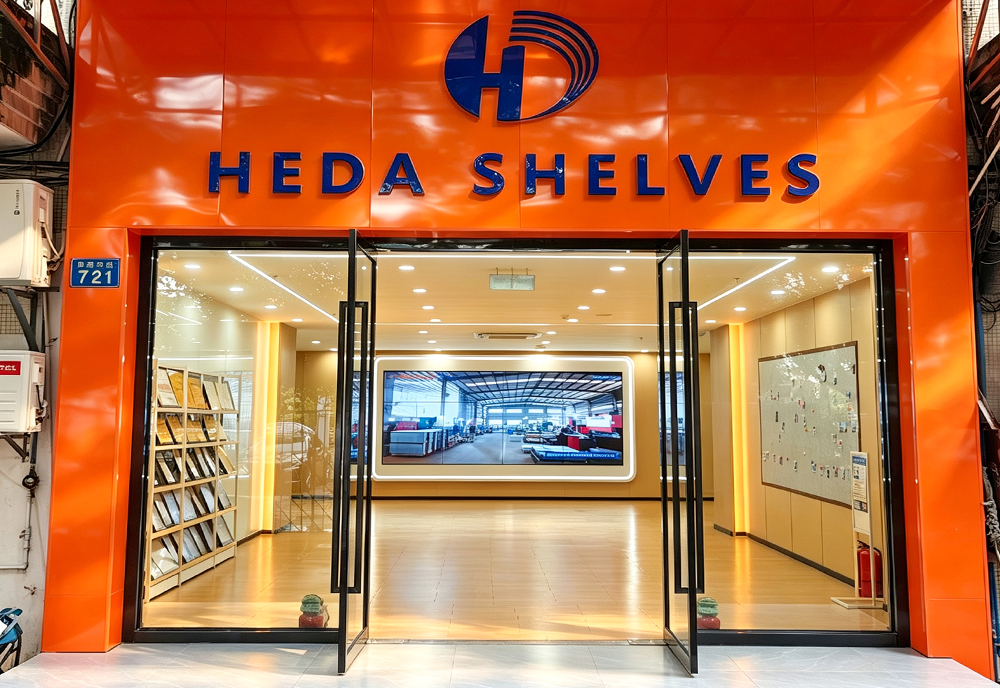
Guangzhou, Guangdong Oct 27, 2026 (Issuewire.com) - What should warehouse operators expect from a China Leading Pallet Racking Manufacturer today? The answer goes beyond steel frames and beams. Modern pallet storage has to balance capacity, direct access, forklift movement, stock rotation, safety, future expansion, and compatibility with automated handling. HEDA SHELVES, approaches Pallet Racking as part of a complete warehouse system rather than as an isolated product.
Why Pallet Racking Still Defines Modern Warehouse Storage
Pallet Racking remains a core structure in distribution centers, factories, retail warehouses, cold stores, food and beverage facilities, chemical storage sites, and 3PL operations. Its purpose is straightforward: use vertical space while keeping palletized goods organized and accessible. The design decision is more complex because different inventory profiles require different balances between selectivity and density.
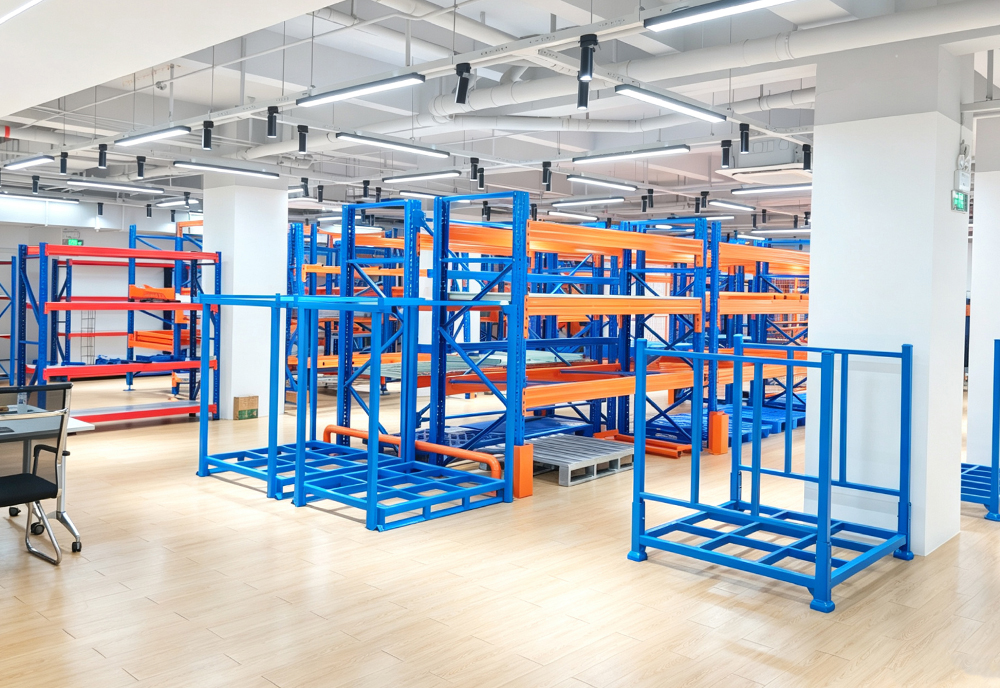
Selective Pallet Racking is the most familiar starting point. Upright frames and adjustable beams create individual pallet positions, allowing forklifts to reach each location directly. HEDA SHELVES offers single-deep and double-deep configurations, with adjustable beam levels that can change as pallet heights or SKU profiles evolve. For warehouses with many SKUs, frequent stock movement, or mixed FIFO and LIFO requirements, this flexibility can matter more than maximizing pallet count.
Where storage density becomes the priority, other systems become relevant. HEDA SHELVES manufactures drive-in, push-back, gravity flow, radio shuttle, VNA, double-deep, and cantilever racking, together with mezzanine structures. Each addresses a different operational need, from reducing aisle space to handling long materials or supporting multi-level picking.
Where Teardrop Pallet Racking Fits
Teardrop Pallet Racking is a roll-formed selective system identified by teardrop-shaped holes punched into upright columns. Boltless beam connectors hook into these openings and are secured with safety devices. The format is widely used in North American warehouse applications because beam elevations can be changed relatively quickly when load heights change.
However, "teardrop" describes a connection pattern, not a guarantee that components from different sources are interchangeable. Beam hooks, hole geometry, steel thickness, frame capacity, and engineering tolerances should still be verified before components are mixed. This is especially important when an existing warehouse is expanded or reconfigured. HEDA SHELVES also distinguishes between roll-formed teardrop designs and structural racks, where bolted connections and heavier sections may suit different impact, seismic, freezer, or fixed-layout conditions.
Choosing a Pallet Racking System by Operation
A useful rack specification begins with operating data. Warehouse managers should define pallet dimensions, unit load weight, SKU count, inventory turnover, stock rotation, building clear height, column locations, floor condition, fire protection constraints, and the material-handling equipment in use.
The storage method can then be matched to the workflow. Selective Pallet Racking suits broad SKU ranges and frequent access. Drive-in systems reduce aisle requirements for larger quantities of similar goods. Push-back systems store multiple pallets in depth while loading and unloading from the same aisle. Gravity flow can support controlled stock rotation, while radio shuttle systems move pallets inside deep lanes without forklifts entering the rack. VNA systems preserve selective access while narrowing aisles, but require specialist trucks and tighter layout tolerances.
This approach also supports future automation. MHI's recent industry reporting shows continued investment in supply-chain technology and automation, driven partly by workforce constraints and the need for more integrated operations. MHI has also highlighted the extension of automation from horizontal transport into vertical warehouse movement. For racking design, structural geometry, aisle planning, interfaces, and repeatable tolerances therefore matter earlier in the planning process.
HEDA SHELVES: Manufacturing and Project Support
Guangzhou HEDA Shelves Co., Ltd was founded in 2001. HEDA SHELVES operates a 30,000-square-meter production site and has more than 300 personnel, with a product range covering pallet racking, industrial shelving, warehouse mezzanines, and accessories. Its website records more than 10,000 completed warehouse storage cases across international markets.
Its service scope extends from layout planning to production and installation support. CAD drawings, 3D renderings, warehouse layout planning, OEM/ODM manufacturing, quality control, packing, shipping, and project support are integrated into the workflow. Production includes incoming steel inspection, automated punching, precision cutting, cold forming, profile forming, welding, surface treatment, powder coating, testing, and shipping controls. These steps matter because rack performance depends on consistent dimensions, connectors, welds, finishes, anchors, and installation conditions, not only nominal load capacity.
Project Experience Across Different Warehouse Conditions
Recent projects show why Pallet Racking should be engineered around the application rather than selected as a generic commodity.
In Ghana, HEDA SHELVES supplied an 8-meter-high, five-level single-deep Selective Pallet Racking system for a chemical warehouse handling drums and packaged raw materials. The design included a load capacity of 4 tons per level and standard forklift access, placing emphasis on heavy loads, clear access, and multiple packaging forms.
A general warehouse project in Mexico used a customized selective system with five beam levels and a rated load of 1,500 kg per level. The objective was to use vertical space more effectively while retaining direct pallet access for varied inventory.
For a 1,000-square-meter pineapple cold room in Malaysia, HEDA SHELVES applied an 8-meter-high radio shuttle racking system, with approximately 1,000 to 2,000 kg supported per storage level or shuttle position. The semi-automated arrangement increased storage density while reducing unnecessary forklift travel inside the cold environment. Together, these projects show how rack design changes with load, SKU profile, temperature, access requirements, and handling method.
Safety, Adaptability, and Lifecycle Planning
A modern racking project should be evaluated over its working life. RMI in the United States maintains ANSI MH16.1 for industrial pallet rack design, testing, and utilization. In practice, operators should confirm design loads, anchorage, rack configuration, beam locking, forklift protection, load signage, inspection routines, and approved repair or modification procedures.
Adaptability is equally important. SKU dimensions change, product lines expand, forklifts are replaced, and automation may be introduced later. Adjustable systems such as Selective Pallet Racking and Teardrop Pallet Racking provide flexibility, while high-density systems can be selected where space cost and pallet volume justify a more specialized layout.
A More Systematic Way to Plan Warehouse Storage
The direction of warehouse storage is not simply toward "more racks." It is toward better use of cubic space, clearer inventory access, safer material flow, and closer integration between storage structures, handling equipment, software, and automation. HEDA SHELVES reflects this shift through a portfolio ranging from conventional pallet racks to shuttle systems, VNA layouts, industrial shelving, and mezzanine-supported storage.
For warehouse operators, the practical starting point is to define the load, inventory behavior, building constraints, forklift or automation interface, and future expansion requirements before choosing a rack type. That turns Pallet Racking from a steel product into an engineered part of the warehouse operating model.
For more information about warehouse racking systems, storage solutions, and project applications from HEDA SHELVES, visit https://www.hedarackstorage.com/.
Source :Guangzhou HEDA Shelves Co., Ltd.
This article was originally published by IssueWire. Read the original article here.